Your Anand Karaj is the spiritual heart of your marriage, and it belongs where it has always belonged — in the gurdwara, in the presence of Guru Granth Sahib. What it may not give you is a marriage the Australian government recognises. That's the part I handle, in Punjabi, so nothing about your day feels like paperwork.
What I do — and what I don't
Let me be straightforward, because this matters more than any marketing line: I am not a granthi, and I do not perform Anand Karaj. The four laavan, sung before Guru Granth Sahib, are not mine to conduct and I would never offer to. That ceremony is complete in itself, and it belongs to your gurdwara.
What I am is a fully registered marriage celebrant, authorised under the Marriage Act 1961. I conduct the legally recognised ceremony that sits alongside your Anand Karaj — the part that produces your marriage certificate — and I conduct it in Punjabi, Hindi or English, whichever your families will feel most at home in.
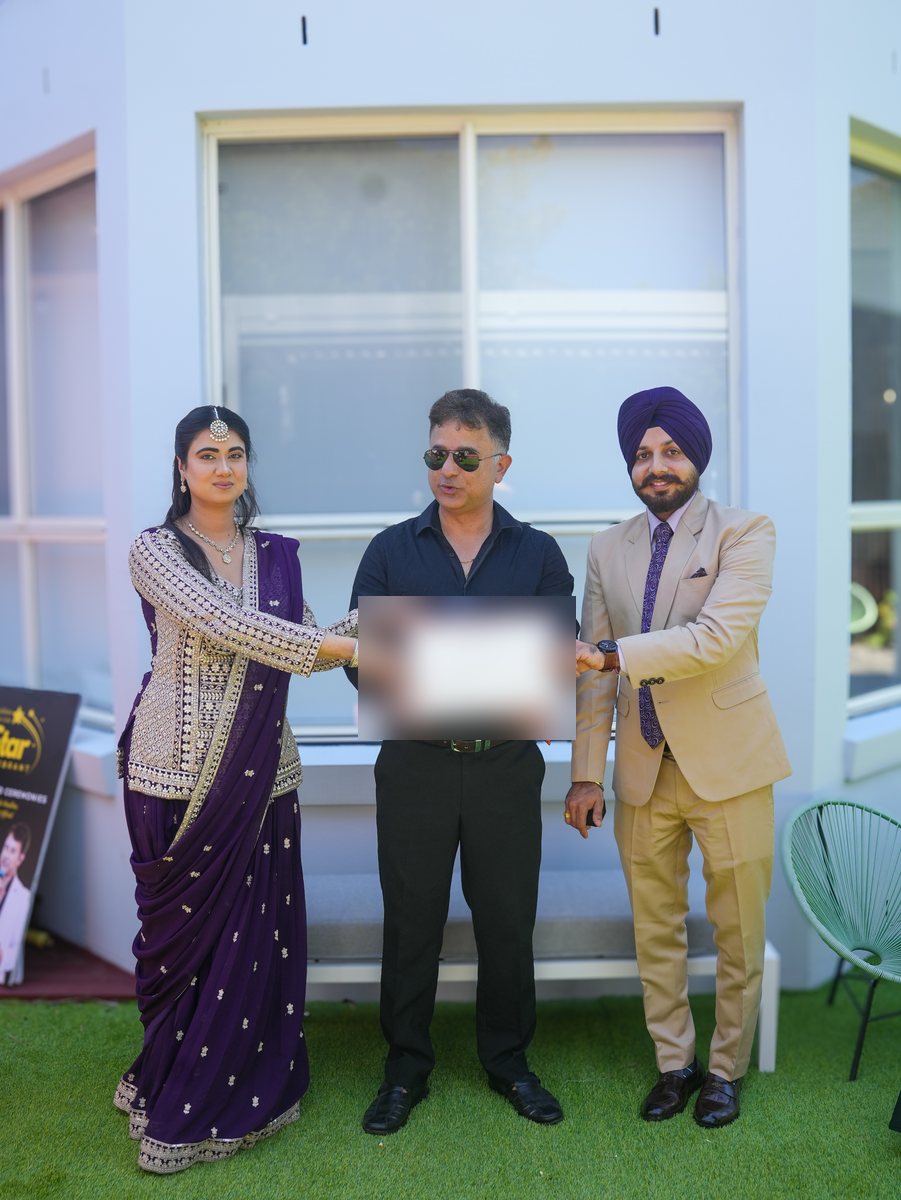
Is an Anand Karaj legally recognised in Australia?
This is the question I'm asked most, and the answer surprises a lot of families.
In Australia, a marriage is only legally valid when it is solemnised by an authorised celebrant under the Marriage Act 1961. Some granthis are registered as ministers of religion and can solemnise a legal marriage. Many are not — they conduct the Anand Karaj beautifully and completely as a religious ceremony, but no legal marriage takes place.
So the honest advice is this: ask your gurdwara directly, and ask early. If the granthi conducting your Anand Karaj is a registered celebrant, you may need nothing further from me. If not, your Anand Karaj is spiritually complete but legally you are not yet married — and you'll want a separate ceremony to make it official.
The legal essentials, in one box
A Notice of Intended Marriage must be lodged with your celebrant at least one month before the legal ceremony — this applies no matter what happens at the gurdwara. You'll need identity documents, two witnesses aged 18 or over, and a small set of legal words that must be said aloud. That's genuinely the whole of it.
Three ways Sikh couples do this in Sydney
- Legals first, Anand Karaj after A short fifteen-minute legal ceremony in the weeks before, at my garden in Bella Vista, your home or a park. The gurdwara day then belongs entirely to your faith and your families, with nothing administrative attached to it. Legals-only ceremonies →
- Same day, at the venue The Anand Karaj in the morning at the gurdwara, then the legal ceremony at your reception venue before the celebrations begin. Fifteen minutes, two witnesses, done — and your guests often enjoy watching the certificate signed.
- Already married in India or abroad If your Anand Karaj happened overseas, you may already be legally married in Australia's eyes, or you may not — it depends where and how. Either way, a celebration ceremony here carries no legal requirements at all, which means complete freedom. Already-married ceremonies →
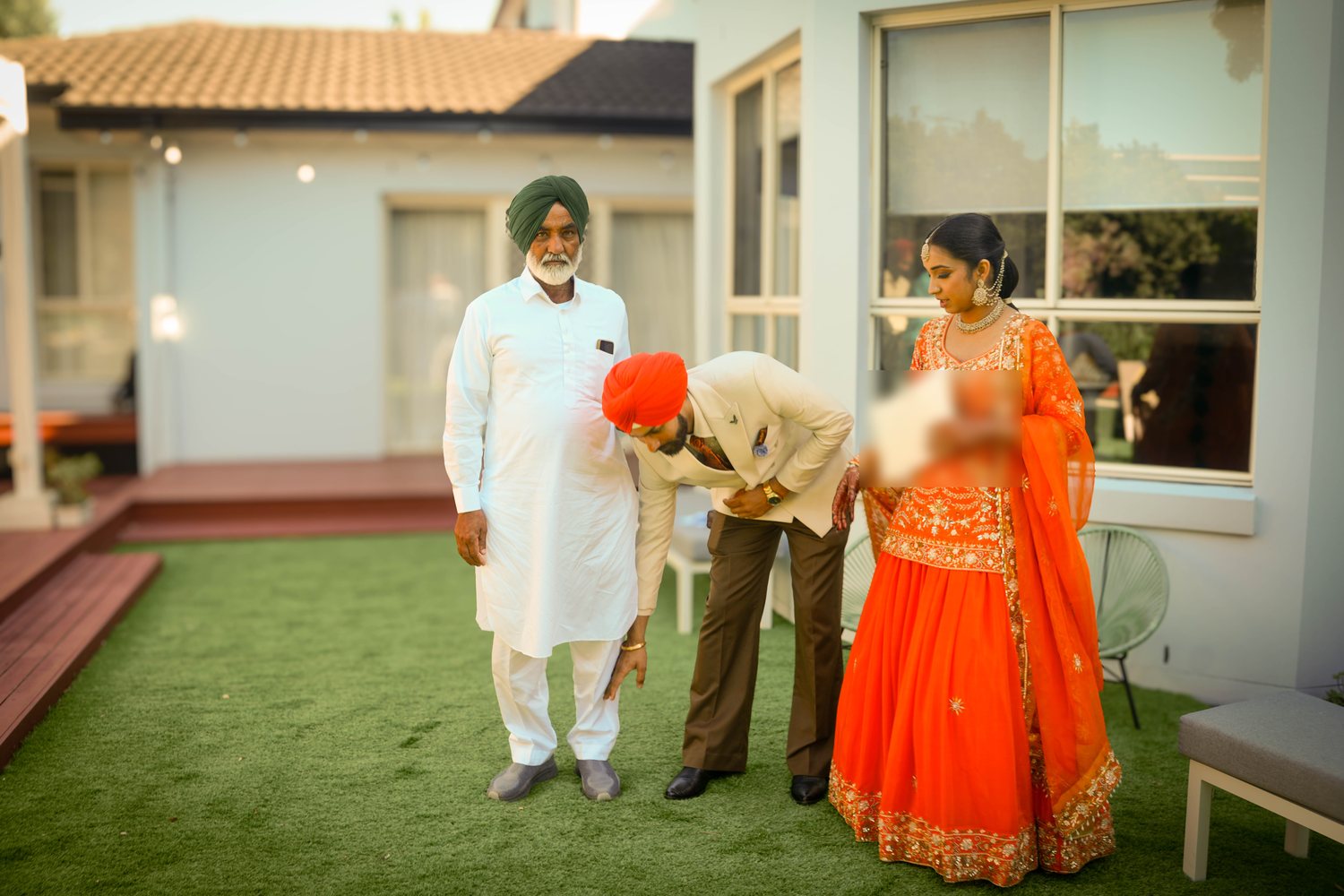
Sikh elements in a civil ceremony
A legal ceremony doesn't have to feel like a formality at a desk. Plenty of Sikh tradition sits beautifully within one — while the things that belong in the gurdwara stay in the gurdwara.
The milni, where the two families formally meet and greet, works wonderfully as an opening. The palla — the groom's scarf passed to the bride — carries its meaning anywhere. Punjabi readings, a blessing from grandparents, kirtan sung by your own family musicians, vows spoken in Punjabi: all of it belongs. I'll also happily include anand karaj-inspired elements where a family wants that echo, framed respectfully as a reflection rather than a repetition.
What I won't do is stage a replica of the laavan outside the gurdwara. It isn't mine to perform, and most families are relieved to hear a celebrant say so out loud.
The gurdwara gives you the marriage. I give you the certificate. Neither should feel like it's competing with the other.
For a real example, Amandeep and Sonia — a Punjabi couple from Dubbo — chose a small, legal garden ceremony in Sydney, kept intimate and entirely their own. And Inder and Anchaldeep did their legal court marriage at home before their Anand Karaj — witnesses arranged and all — so the gurdwara day could stay purely sacred.
In Punjabi, properly
I conduct ceremonies in Punjabi, Hindi and English, and most often a blend of them. That matters more than it sounds. It's the difference between a nanaji or dadiji politely watching a ceremony and genuinely following it — hearing the promises, understanding the words, laughing at the right moment. For a lot of the families I work with, that's the detail they remember afterwards.
I'm based in Bella Vista in the Hills District and travel across Sydney — Blacktown, Parramatta, Glenwood, Kellyville, Liverpool and the south-west, wherever your gurdwara and venue happen to be.
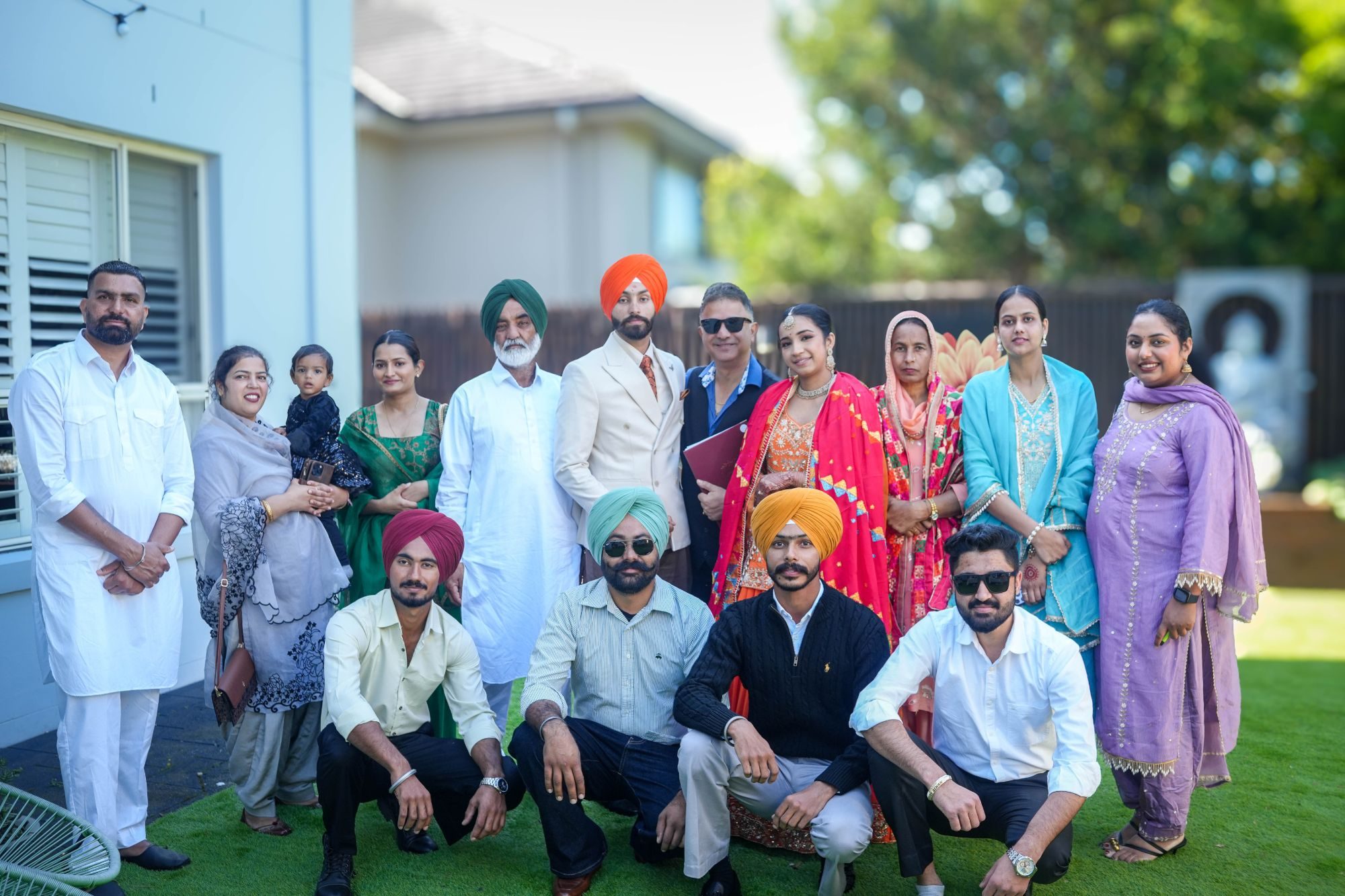
"We can't thank Star Celebrant enough for our wedding. We are a Sikh couple and he made our marriage feel special, personal and stress-free — he explained all the legal parts clearly and guided us through everything. He married us at his home in Bella Vista with our close family and even did our photography, which was beautiful and saved us the hassle of coordinating multiple vendors. All our guests loved the ceremony. If you're looking for a caring and professional marriage celebrant in Sydney, especially for an Indian or Sikh wedding, we highly recommend him. Bahut vadhiya kaam kita, bahut dhanwaad ji. 🙏"Verified Google review — read it on Google
Inside a Sikh wedding in my garden
Tap to play
A Sikh couple I married in my Bella Vista garden
Real Sikh & Punjabi weddings
Couples I've had the honour of marrying
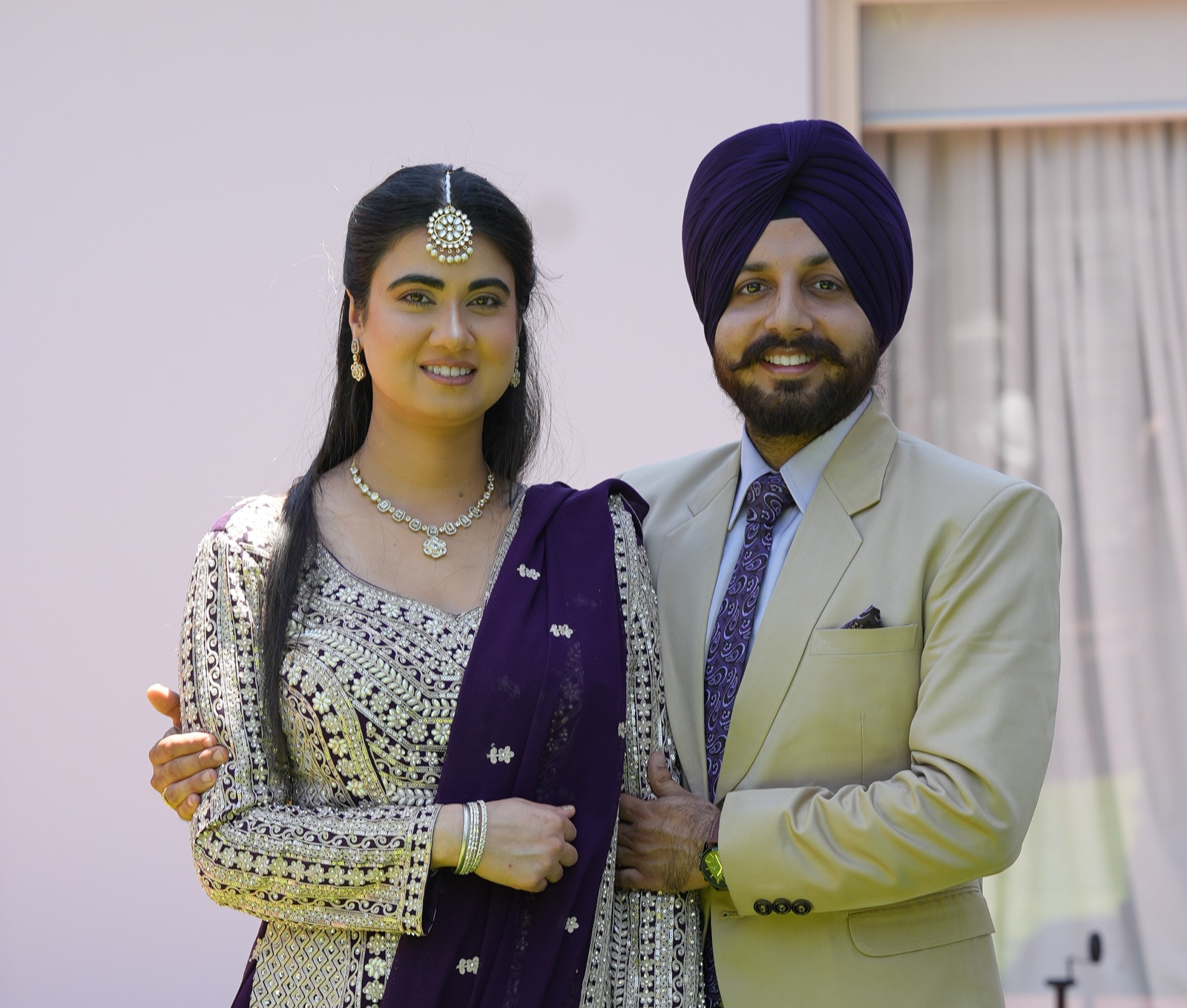
Kanwarpal & Jashandeep
Canberra meets Sydney: a big family wedding in my garden, with relatives from both sides.
Read their story →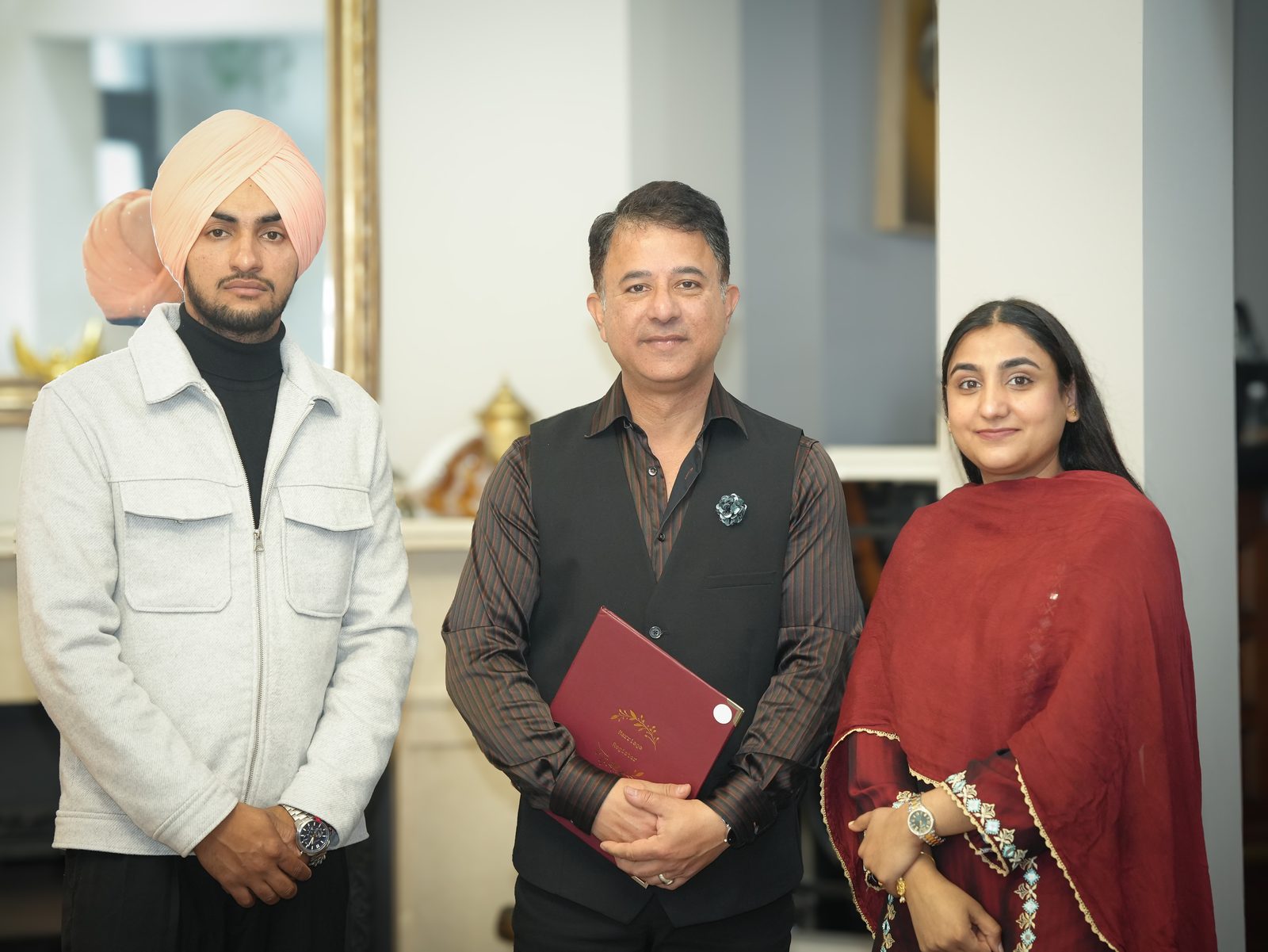
Inder & Anchaldeep
A legal court marriage at my home — witnesses arranged and all — so their Anand Karaj could stay purely sacred.
Read their story →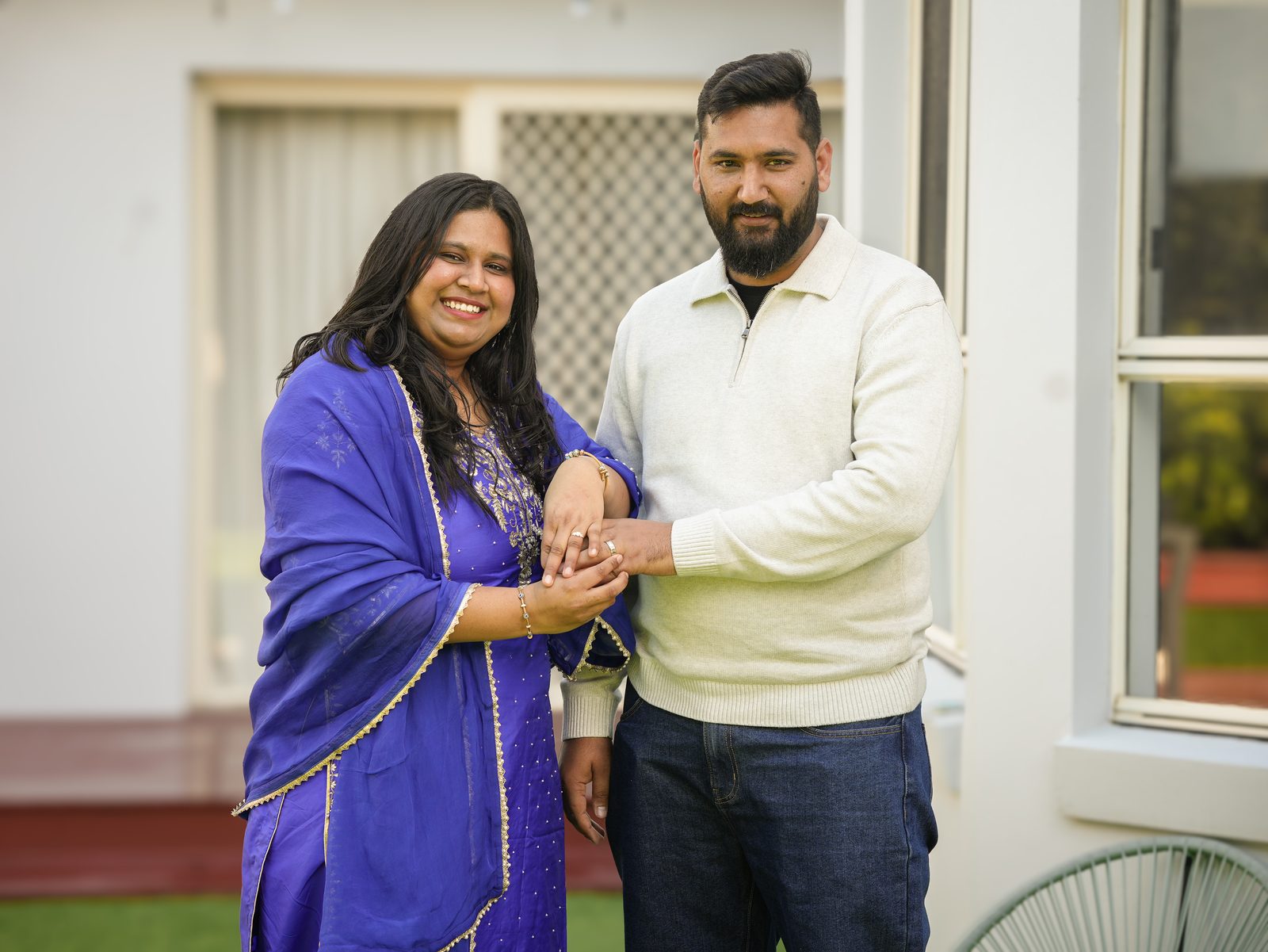
Amandeep & Sonia
A Punjabi couple who drove through the night from Dubbo for a small, heartfelt 9am garden ceremony.
Read their story →Frequently asked questions
Is an Anand Karaj legally recognised in Australia?
Only if the person conducting it is an authorised celebrant under the Marriage Act 1961. Some granthis are registered as ministers of religion; many are not. Ask your gurdwara directly — if they aren't registered, your Anand Karaj is spiritually complete but you'll still need a separate legal ceremony.
Can you perform our Anand Karaj?
No. I'm not a granthi, and the Anand Karaj belongs in the gurdwara before Guru Granth Sahib. What I provide is the legally recognised ceremony alongside it, in Punjabi, Hindi or English.
Can we have the legal ceremony on the same day as the gurdwara?
Yes, and many couples do. It takes about fifteen minutes and can happen at your reception venue, your home or a garden before the celebrations begin. It can equally be done quietly on a separate day.
Do we still need to lodge a Notice of Intended Marriage?
Yes — at least one month before the legal ceremony, regardless of what happens at the gurdwara. You'll also need two witnesses aged 18 or over.
Can the ceremony be conducted in Punjabi?
Yes. I conduct ceremonies in Punjabi, Hindi and English, or any blend, so every relative understands the words being spoken.
Planning a Sikh wedding in Sydney?
Tell me your gurdwara date and I'll tell you exactly what the legal side needs — usually far less than couples expect.
Start the Conversation