This question comes up in almost every first conversation I have with an Indian couple in Sydney, and there's usually a moment of alarm when they hear the answer. So let me give it to you straight away: for most couples, it isn't one or the other. It's both — and that's far less complicated and less expensive than it sounds.
They're doing two completely different jobs
A pandit (or purohit) conducts the religious marriage. The sacred rites, the mantras in Sanskrit, the fire, the seven steps — this is the ceremony that marries you in the eyes of your faith and your family. It is complete in itself, and it has been for a very long time.
A marriage celebrant conducts the ceremony that marries you in the eyes of Australian law. That means specific legal wording, a Notice of Intended Marriage lodged in advance, two witnesses, and registration with Births, Deaths and Marriages afterwards.
Neither replaces the other, because they aren't competing. One gives you a marriage your grandmother recognises. The other gives you a marriage Medicare, Home Affairs and your bank recognise.
| Hindu Priest (Pandit) | Marriage Celebrant | |
|---|---|---|
| Conducts | The religious ceremony — kanyadaan, the fire ritual, saptapadi and pheras | The legal ceremony under the Marriage Act 1961 |
| Language | Usually Sanskrit, with explanation in Hindi or English | Any language you like, though the legal words are in English |
| Paperwork | None, unless separately registered | NOIM, declarations, certificates, registration with BDM |
| Makes you legally married? | Only if registered as an authorised celebrant | Yes |
| Typical length | One to three hours, depending on tradition | Around fifteen minutes for a legals-only ceremony |
The one question that decides it
Ask your pandit this, and ask it early: "Are you registered as an authorised celebrant under the Marriage Act?"
Some are. A number of pandits in Sydney are registered as ministers of religion and can solemnise a legally valid marriage themselves, in which case you need nothing further. Many are not — they are religious officiants, not legal ones, and were never intending to be.
If the answer is no, nothing is wrong and nothing is ruined. You simply add a short legal ceremony. But you want to know this months ahead rather than weeks, because of the timing rule below.
The timing trap
A Notice of Intended Marriage must be lodged at least one month before the legal ceremony. Couples who discover late that their pandit isn't registered can find themselves inside that one-month window with no way to be legally married on the day — a genuinely stressful discovery two weeks out from a wedding.
The fix is simple and free: ask the question early.
How couples usually sequence the two
Legal ceremony quietly beforehand
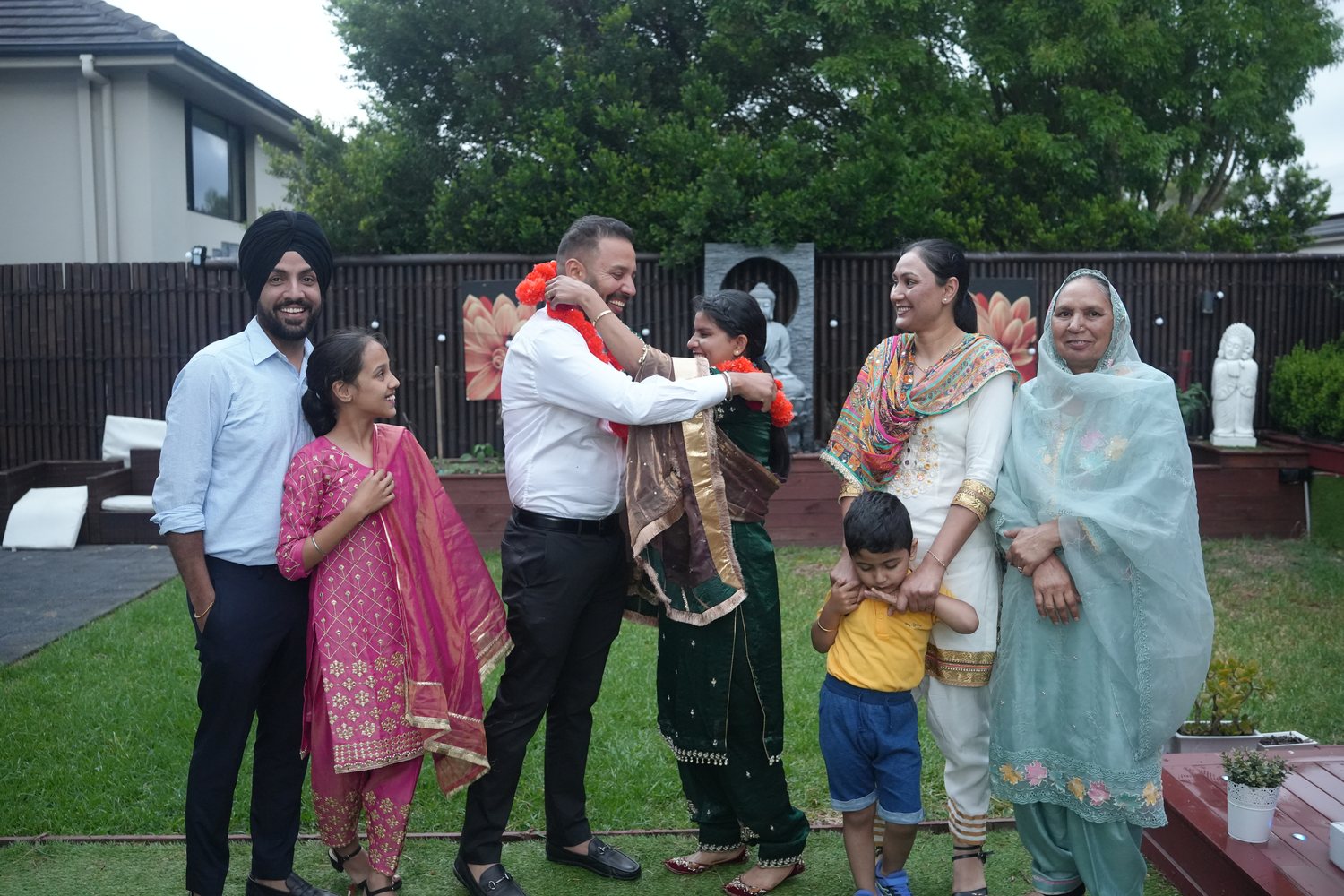
The most popular option. A fifteen-minute legal ceremony a few weeks earlier, often with just parents present, at my garden in Bella Vista or your home. The wedding day itself is then purely religious and celebratory, with no forms, no signing table, no interruption to the rituals.
Both on the same day
The pandit conducts the religious ceremony, and either immediately before or after it I conduct the legal component at the same venue. Guests often enjoy this — the signing becomes a photo moment rather than an administrative one.
Married in India already
If you were married in India, whether that marriage is recognised here depends on how it was registered there. Many couples in this position hold a celebration ceremony in Australia with no legal requirements attached at all, which means total creative freedom.
The pandit marries you. I make sure the government agrees. Not one couple has ever told me those two things felt like they were competing.
Working alongside your priest, not over him
I want to be clear about my own role here, because I think it matters. I am not a pandit. I don't perform the sacred rites, I don't chant the mantras, and I would never offer to. Those belong to your priest and to your tradition.
What I do is liaise directly with the pandit so the two components are sequenced correctly and nothing is rushed or doubled up. Where families want it, I also narrate the rituals in English as they happen — so an Australian side of the family who has never seen a saptapadi understands what they're watching, rather than politely guessing for two hours. That small addition transforms how included everyone feels.
I conduct the legal ceremony itself in English, Hindi or Punjabi, whichever suits the room.
And if you're still looking for a pandit — or for the rest of the suppliers around the day — my directory of Indian wedding vendors in Sydney lists pandits, photographers, decorators and caterers I see doing good work.
Frequently asked questions
Do I need a celebrant if we're having a Hindu ceremony with a pandit?
In most cases yes. The religious ceremony is complete in itself, but it only creates a legal marriage if the pandit is registered as an authorised celebrant under the Marriage Act 1961. Many are not.
Can a pandit legally marry us in Australia?
Only if that pandit is registered as a minister of religion or authorised celebrant. Some are. Ask directly, and ask early — the Notice of Intended Marriage must be lodged at least a month before.
What's the actual difference in what they do?
The pandit conducts the sacred rites — kanyadaan, the fire ritual, the saptapadi and pheras, usually in Sanskrit. The celebrant conducts the legally valid ceremony, lodges the paperwork and registers the marriage.
Can both happen on the same day?
Yes, very commonly. The legal ceremony takes around fifteen minutes and can sit immediately before or after the religious one. Many couples instead do the legal side quietly weeks earlier.
Will a celebrant interfere with the religious ceremony?
No. The sacred rites belong to the priest. My role is the legal component, plus explaining the rituals in English for guests unfamiliar with them, if that's wanted.
Not sure what your ceremony needs?
Tell me who's conducting your religious ceremony and I'll tell you exactly what's required legally — usually in one short conversation.
Start the Conversation