Legals-Only Ceremonies · Sydney
Court Marriage in Sydney — Here's How It Actually Works
If you've been searching for "court marriage" in Australia, here's the good news: you don't need a court at all — and the Australian way is faster, cheaper and far more flexible. I'll make your legal marriage feel like a meaningful wedding rather than an administrative appointment.
The short answer: Australia doesn't have court marriage. The equivalent is a legals-only civil ceremony — a short, legally binding marriage conducted by an authorised celebrant under the Marriage Act 1961. It takes about 20 minutes, can happen almost anywhere (your home, a garden, a park), and your marriage is recognised in India and worldwide.
As featured inThe Indian Sun — "How couples can get married legally in Australia without a court"
Watch: Court Marriage in Australia, Step by Step
Four minutes, in plain English: what "court marriage" means in Australia, what you need, and what happens on the day.
Captions are on in the video. Watch on YouTube. General information only, not legal or migration advice; for visa questions, speak to a registered migration agent.
Court Marriage in India vs Civil Marriage in Australia
Same legal outcome — a registered, internationally recognised marriage — but the process here is simpler than most couples expect.
| Court marriage (India) | Legals-only ceremony (Australia) | |
|---|---|---|
| Where it happens | Marriage registrar's office / court | Anywhere you like — home, garden, park, café |
| Notice period | 30 days under the Special Marriage Act | 1 calendar month (NOIM), valid for 18 months |
| Who conducts it | Marriage registrar | Authorised marriage celebrant |
| Witnesses | Three witnesses | Two witnesses, aged 18+ |
| Ceremony length | Varies; often a full-day office visit | Around 20 minutes, at a time that suits you |
| Language | English / local language | Legal wording in English; I explain everything in Hindi or Punjabi too |
| Recognised overseas | Yes | Yes — including in India (apostille available) |
Court Marriage, Civil Marriage or Registry Wedding — What's the Difference?
If you've moved to Sydney from India, Pakistan, Nepal or Bangladesh, "court marriage" is the phrase you grew up with. In Australia the same thing goes by a few different names, and they all describe one legal event — a civil marriage solemnised under the Marriage Act 1961. It helps to know which word is which:
- Civil marriage — the umbrella term for any non-religious legal marriage in Australia. A court marriage is simply the civil-marriage equivalent.
- Civil wedding / civil ceremony — the ceremony itself, conducted by an authorised celebrant rather than in a court or place of worship.
- Registry wedding — a civil marriage held at the NSW Registry of Births, Deaths & Marriages office. A celebrant does the same thing, but at your choice of place and time.
- Legals-only ceremony — the short, paperwork-focused version most of my couples choose: the legal wording, the signatures, and the legal marriage registration with NSW BDM, in about twenty minutes.
So whether you're searching for a court marriage in NSW, a civil marriage in Sydney, or how to handle legal marriage registration here, you're in the right place — it's the same ceremony, and it's the one I do most weeks. There's no court and no queue; you pick the where and the when, and I take care of the law.
Court Marriage vs Registered Marriage in Australia
Short answer: in Australia there is no separate "court marriage" — a court marriage is a registered civil marriage. Every legal marriage here, whether you marry with a celebrant or at the registry, is registered with NSW Births, Deaths & Marriages, so the certificate is the same. The only real choice is who conducts it and where.
| The term you're searching | What it means in Australia | Is it legally registered? |
|---|---|---|
| Court marriage | The South-Asian name for a civil marriage. Australia has no court step — an authorised celebrant does the same job. | Yes — registered with NSW BDM |
| Registered marriage | Any marriage lodged and recorded with the state registry — which every legal Australian marriage is. | Yes — that's what "registered" means |
| Registry wedding | A civil marriage held at the NSW Registry office itself, on their dates and times. | Yes — registered with NSW BDM |
| Legals-only ceremony | A short civil ceremony with a celebrant at your choice of place and time — the flexible version most couples pick. | Yes — registered with NSW BDM |
So whether you call it a court marriage or a registered marriage, the outcome is identical: a legally registered marriage and an official NSW certificate valid in India and worldwide. The legals-only ceremony simply gives you that same result without the registry's fixed venues and timeslots.
The Process, Step by Step
Four steps from paperwork to certificate. I handle the legal side; you just show up.
Lodge the NOIM
We complete your Notice of Intended Marriage at least one month before the ceremony. I witness your signatures and check your documents. The NOIM stays valid for 18 months, so there's no pressure to rush the date.
One-month wait
A legal requirement for every marriage in Australia — registry or celebrant. Urgent situation? See shortening of time below.
The ceremony
Around 20 minutes: the legal wording (the monitum), your legal vows, and signing with your two witnesses. As personal or as simple as you want — legally married either way.
Registration & certificate
I register your marriage online with NSW Births, Deaths & Marriages, so you can order your official marriage certificate quickly — the document you'll need for visas, banks, and use overseas.
Need to marry sooner than one month?
In limited circumstances, a prescribed authority (such as the NSW Registry) can approve a shortening of time under Schedule 3 of the Marriage Regulations — for example, medical reasons, employment or travel commitments, legal proceedings, or wedding arrangements already locked in. It's not automatic and needs evidence, but I can guide you through whether your situation qualifies and how to apply.
What Does It Cost?
A legals-only ceremony with an independent celebrant typically costs less than the registry — with none of the fixed timeslots. Celebrant vs registry office, compared →
| NSW Registry office | Star Celebrant legals-only | |
|---|---|---|
| Price | Ceremony options from $662* | $650, all-inclusive |
| Location | Registry venues, set locations | Your home, The Garden Sanctuary at Bella Vista, a park — your choice |
| Timing | Available timeslots, business scheduling | Evenings and weekends welcome |
| Language support | English | English, Hindi & Punjabi |
| Who marries you | Assigned registry celebrant | Me — the same person, start to finish |
| Includes | Venue, celebrant, standard certificate | NOIM lodgement, ceremony, registration, ceremonial certificate on the day |
*NSW Registry pricing as published July 2026 — check the Registry website for current fees.
Just the Two of You? Witnesses Included
Every marriage in Australia needs two witnesses aged 18 or over — the one detail that trips up couples who want something truly private, or who have only just arrived in Sydney.
Don't have two witnesses? You don't need to round up guests or invite anyone you'd rather not. If you're newly arrived in Sydney and don't yet have family or friends free on the day — or you simply want an intimate ceremony, just the two of you — I can arrange your two witnesses for the signing.
Because I hold ceremonies at my family home in Bella Vista, there are usually people close by who can step in. You can turn up as a couple and leave legally married — no logistics, no awkward asks, nothing standing between you and your marriage.
Documents You'll Need
Whether you're citizens, permanent residents, or here on a visa — student, work, partner, or visitor — you can legally marry in Australia. There is no citizenship or residency requirement. You'll need:
- Identity and birth details: your passport (any country), or a birth certificate plus photo ID.
- If previously married: your divorce order or your former spouse's death certificate.
- Translations: any document not in English needs an official English translation.
- Two witnesses aged 18+ on the day.
If your documents come from overseas — a birth certificate, a divorce order, or a marriage certificate in another language — the overseas documents and translations guide covers exactly what's accepted and what needs a certified translation.
Planning to use your certificate in India? You'll want the official marriage certificate from NSW Births, Deaths & Marriages (not just the ceremonial one signed on the day), and often a DFAT apostille for Indian authorities. I'll walk you through exactly what to order and when — it's a common part of the ceremonies I do.
In English, हिन्दी and ਪੰਜਾਬੀ
The legal words must be spoken in English — but nothing else has to be. I conduct legals-only ceremonies where every step is explained in Hindi or Punjabi, so parents beside you (or joining by video call from Delhi, Chandigarh or Lahore) understand every moment. A court marriage doesn't have to feel like paperwork.
This comes up most often around Blacktown and Seven Hills, home to one of the largest Punjabi-speaking communities in the country — where I also run ceremonies after hours for couples on shift rosters.
Ask about a bilingual ceremonyLegals Now, Celebration Later
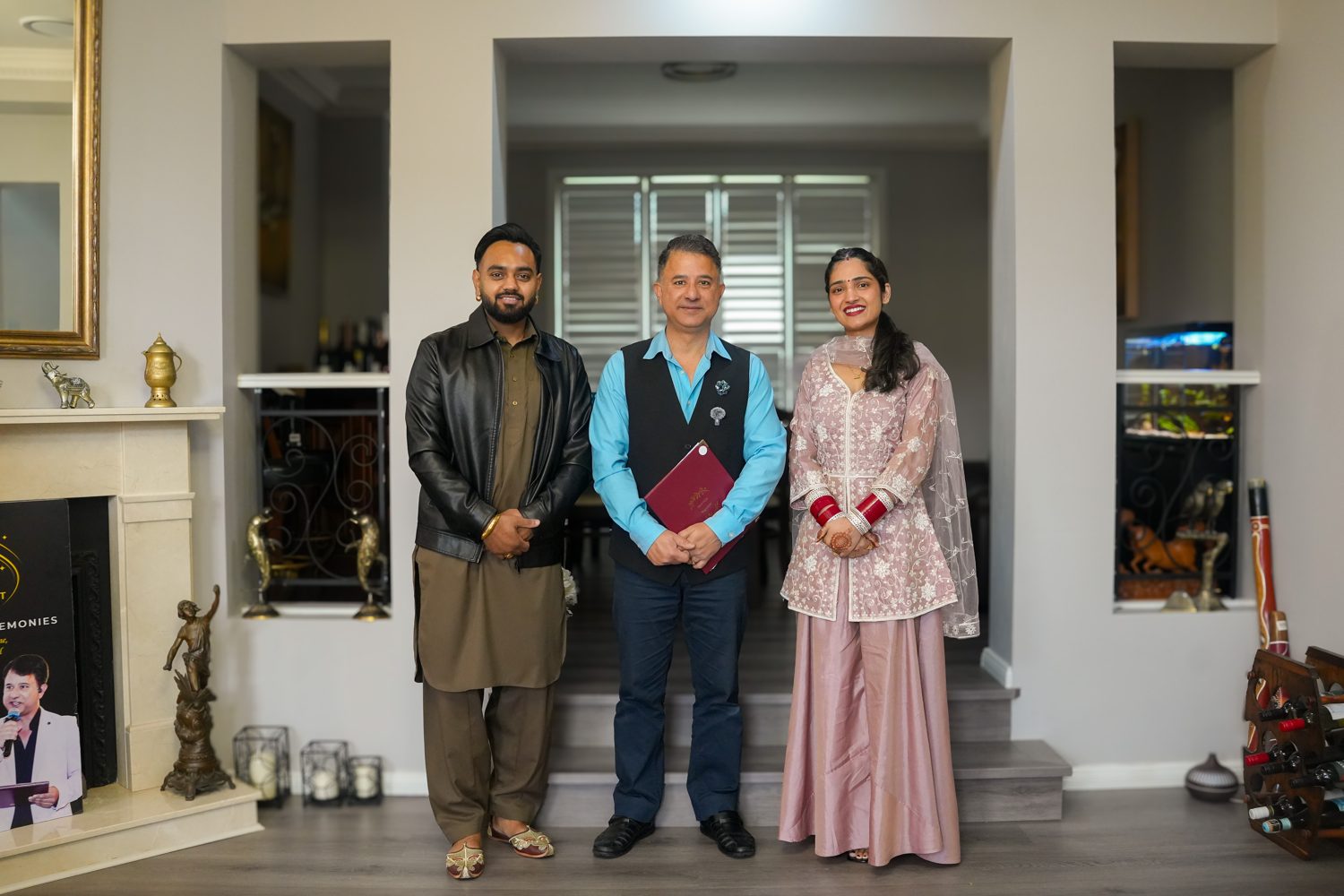
Many of my couples complete their court marriage first — for a visa application, travel plans, or simply to lock in the legal side — and hold their full wedding celebration months later, here or overseas. It's exactly what Inder & Anchaldeep did: a quiet legal court marriage at home before their Anand Karaj at the gurdwara. Sahil & Radhika did the same before their big reception — a simple home ceremony with family as witnesses.
Here's the part most couples don't realise: once you're legally married, your later celebration has no legal requirements at all. That means total freedom — full cultural rituals, any language, any structure, any length. Pheras, anand karaj-inspired elements, nikah traditions, tea ceremonies, or a fusion of all of the above.
When you're ready for that chapter, I do those too: read the full guide to already-married ceremonies, explore my multicultural wedding ceremonies, or ask about the combined celebrant + photography packages with Sydney Snapshots.
Real court marriages in Sydney
Real couples I've legally married in Sydney — the quiet, official part done simply and warmly, with the big celebration kept for later.
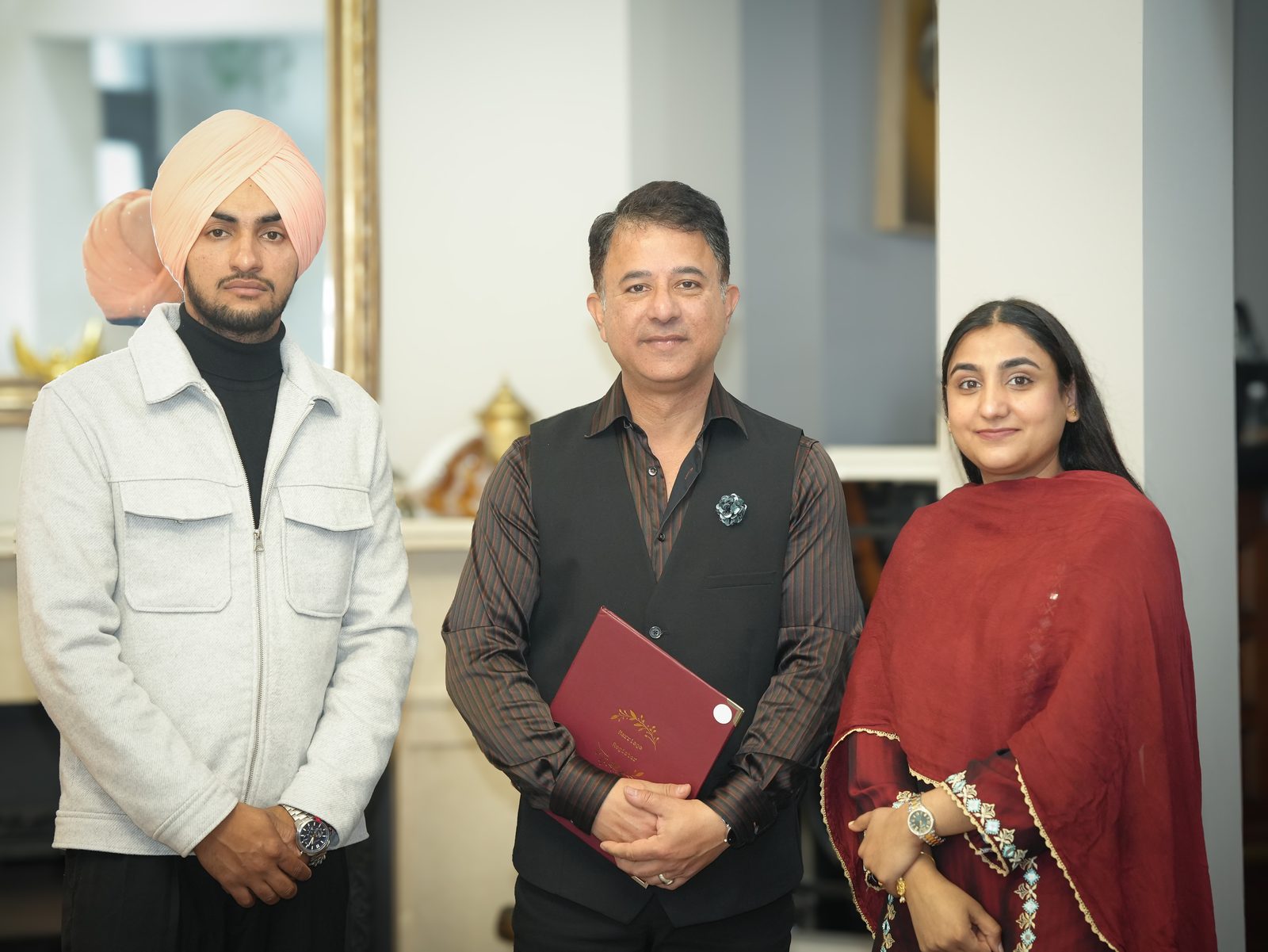
Inder & Anchaldeep
A quiet legal court marriage at home — witnesses arranged — before their Anand Karaj at the gurdwara.
Read their story →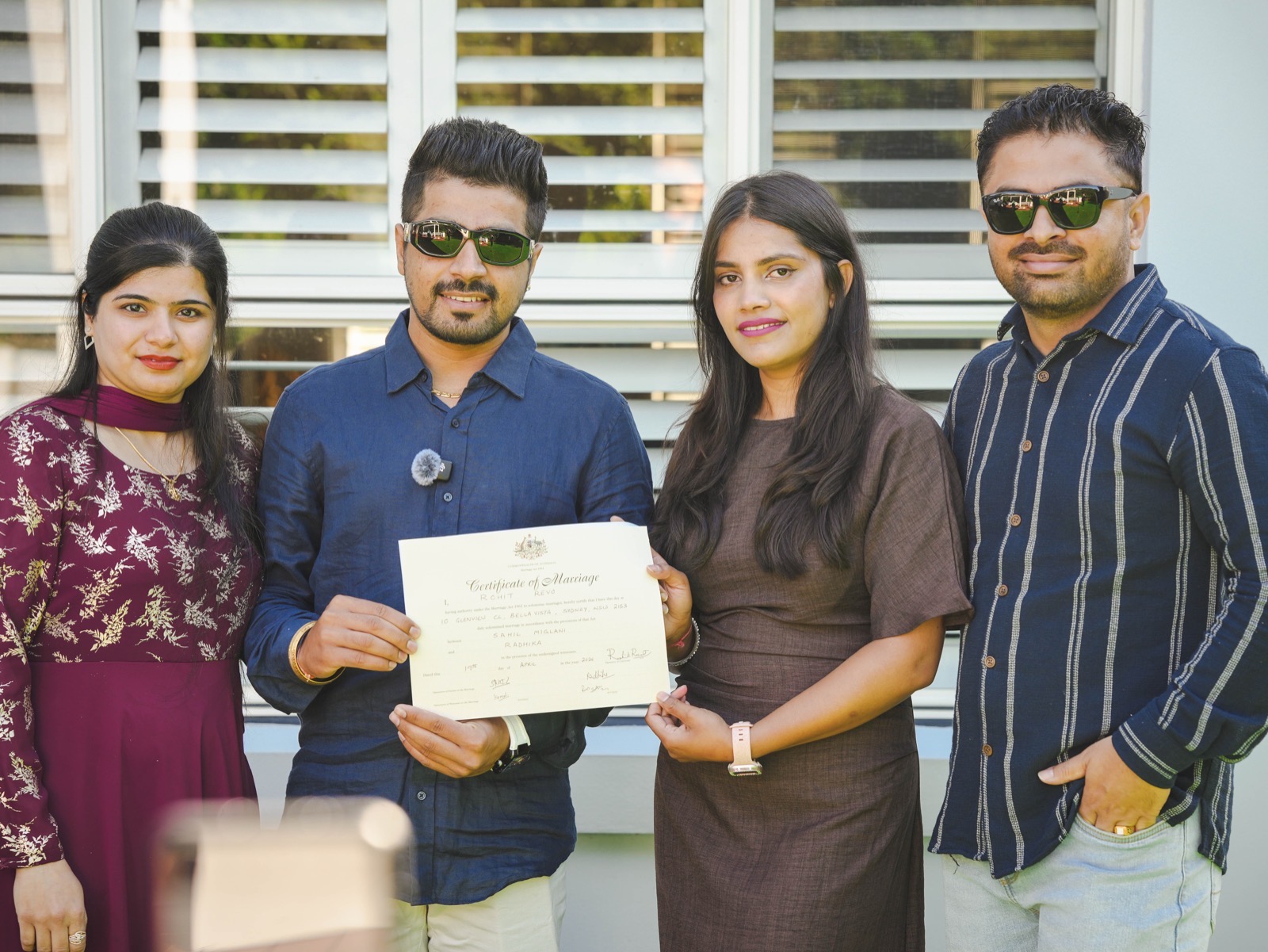
Sahil & Radhika
A simple legal ceremony at home, witnessed by family, before a big reception at a marriage hall.
Read their story →"Great experience. Very professional, and helpful throughout the process."Verified Google review — read it on Google
"This guy is an absolute legend! Thank you so much for being part of our special day and helping make the moment so memorable. We truly appreciate everything you did for us!"Verified Google review — read it on Google
On a Student Visa, Marrying for a Partner Visa?
Before you lock in a wedding date, watch this — the one NOIM timing mistake I see international students and their partners make most often. Australian law requires a full one-month notice period after your Notice of Intended Marriage is lodged, and a visa expiring won't waive it. Many of these couples are Nepali or Indian students around Western Sydney — there are pages written for them.
Lodge your NOIM early — it's valid for 18 months, so you don't need a final date yet. General information only, not migration advice; for visa questions, speak to a registered migration agent.
Court Marriage FAQs
Is there court marriage in Australia?
What's the difference between a court marriage and a civil marriage?
Can you do a civil wedding ceremony in Sydney, not just the paperwork?
How long does the process take?
How much does a court marriage cost in Sydney?
Do we need witnesses?
Will our certificate be valid in India?
Can we do the legals now and the big wedding later?
Can the ceremony be in Hindi or Punjabi?
We're on visas — can we still marry?
Ready to Arrange Your Court Marriage in Sydney?
Message or call me with your preferred date and I'll confirm availability, walk you through the NOIM, and answer anything about certificates for overseas use. And if you'd like your day to feel like more than a signing — a few photos, a proper moment, your families there — just say; that's the part I love.
Message Star Celebrant on WhatsAppPrefer to talk? Call me on 0494 320 779.